Osseointegration of metallic implants depicted without artifacts

Our test specimen is a distal femur from a sheep with two titanium screws. We scanned our specimen with the X4 POSEIDON at an X-ray energy of 110 kV, a 1 mm molybdenum filter, and a voxel size of 30 µm. The cross-sectional image through a titanium screw in the femoral condyle shows no artifacts in the shadow of the metal. The undamaged bone structure in the screw thread is clearly visible.

X4 Poseidon Desktop Micro-CT ideally suited for pharmaceutical development

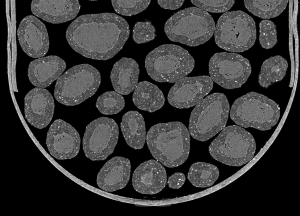
Thanks to its non-destructive analysis capabilities, Bruker's X4 Poseidon imaging platform is ideally suited for pharmaceutical development and quality control. This 3D X-ray microscope is a benchtop instrument that enables non-destructive analysis of both the outer capsule and its contents using a high-resolution 3D dataset. The image shown here was scanned at a voxel size of 3.5 µm in just 26 minutes.

Ultra-fast SEM-EDX analysis of particles larger 100 µm with the ParticleX

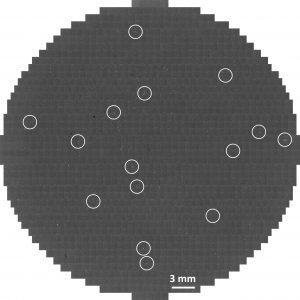
With modern SEM-EDX instruments, particle analysis of the entire filter is usually faster than a correlative approach. The Phenom ParticleX automates residual contamination analysis; no expert knowledge is required. And best of all: A single pass for particles as small as 100 µm typically takes only about 15 minutes. Watch the video to see for yourself!

Quality control in precious metals industry using SEM-EDX

Ceramic crucibles are indispensable in the precious metals industry, but due to the high melting temperatures of some precious metals, they have a limited lifespan and sometimes need to be replaced daily. Each replacement means lost time and additional costs. A customer turned to our accredited testing laboratory to maximize their service life.

Historical PSEM on display at the Electron Microscopy Museum Nuremberg

We recently donated a historic but still functional PSEM microscope from this era to the Nuremberg Electron Microscopy Museum. The museum showcases the history and applications of electron microscopy through a wide range of exhibits and was recently featured in a Bavarian Broadcasting program. We are delighted that our instrument has found a place in the exhibition and will continue to be used there.