













PARTICLES PROBLEM? REMAINING DIRT ANALYSIS ROENTGEN HIGH RESOLUTION 3D X-RAY MICROSCOPY WHAT? HOW MUCH AND FROM WHERE? EDX ELEMENTAL ANALYSIS QUICK TEST CLEANLINESS VDA-19 PARTICLE SCANNER QUALITY TESTED ACCREDITED ANALYZES FASCINATING INSIGHTS X-RAY MICRO/NANO-CT REMAINING DIRT ANALYZE TECHNICAL CLEANLINESS TABLETS UNDERSTAND 3D MICROTOMOGRAPHY MATERIAL & STRUCTURE ANALYTICS CONSULT A TEST LABORATORY NON-DESTRUCTIVE TEST PORE ANALYSIS IN 3D DAMAGE HARD PARTICLES DETERMINE PARTICLE HARDNESS SPECTRAL PICTURES RAMAN MICROSCOPY INSIGHT PLEASE? 3D TAXONOMY VIRTUAL

Tiny Particles – Catastrophic Effect

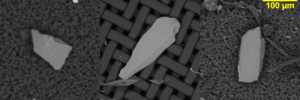
A German automobile manufacturer recently learned what problems the smallest residual dirt particles can cause: It had to recall numerous vehicles due to engine malfunctions. The reason was manufacturing residues consisting of hard particles, which lead to major engine damage - in the worst case, to burning cars. Hard residual dirt particles usually come from the fine processing of surfaces by glass blasting, vibratory grinding, honing […]

Wearout Analysis of Bearing Shells

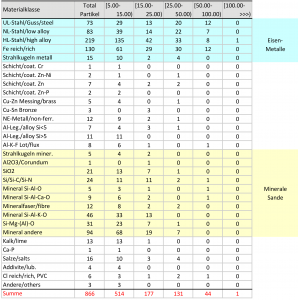
Bearing shells have the function of rolling and supporting rolling elements. In four-stroke engines, for example, the connecting rod that connects the piston to the crankshaft rotates in a bearing. This is lubricated with oil, which reduces friction and thus wear. However, the lubricant contains various residual contaminant particles that can become lodged in the bearing shell.

How Pure is Distilled Water?

Distilled water has many uses in everyday life, for example as coolant in cars or in steam irons. It has the reputation of being purer than tap water, which is why distilled water is also used for cleanliness analysis in the laboratory. Residues in the water would contaminate the samples during analysis and distort the results.