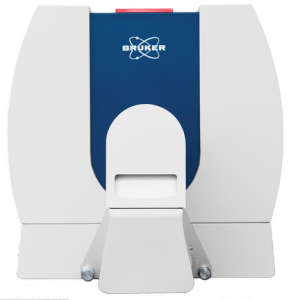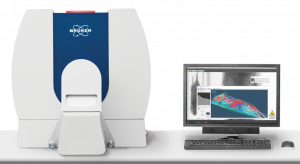
When it comes to component cleanliness, the hardest particles are the ones that cause the greatest damage. Finding these killer particles is difficult, because they can be so small that they are not detectable with a light microscope. The SEM-EDX scanning electron microscope determines the hardness as well as the origin of particles and measures even the smallest particles below 1 μm very precisely by scanning with an electron beam.
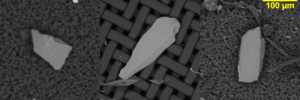
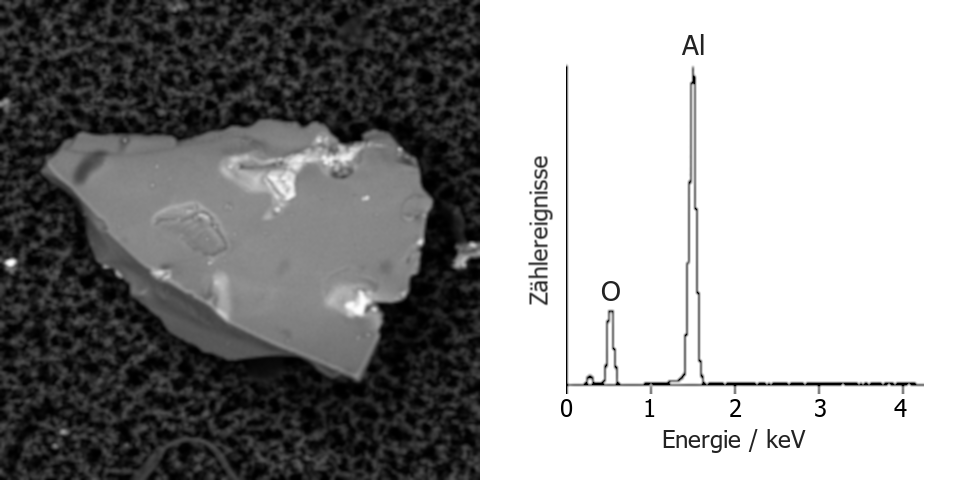
The figure shows the electron microscopic representation of a corundum particle with element spectrum, collected with a SEM-EDX. Corundum is an oxide of aluminum that is typically used as a grinding and blasting agent. With a Mohs hardness of 9, it is a particularly hard mineral and one of the dreaded killer particles. The whitish corundum particles are generally only <20 μm in size, meaning classification is only possible by means of SEM-EDX.
Inform yourself about our SEM-EDX Analytics as well as our accredited analysis service.