















ONLINE BASIC COURSE
Cleanliness analysis according to VDA 19.1 & ISO-16232
Part 5
Gravimetric Analysis of Particle Mass
The absolute particle mass can be determined relatively easily using a precision scale. The basic idea is to weigh the filter before and after loading. The weight difference corresponds to the absolute particle mass. For correct results, it is important to condition the membrane prior to the analysis:
- Immersion of the filter in the extraction liquid
- Filter drying in oven
- Filter storage for a defined time in the desiccator
However, technically it can be relatively difficult to determine a residual particle weight below three milligrams, since the measured filter weight is influenced by the ambient conditions (temperature, humidity). As a remedy, it is advised to increase the quantity of the tested batch accordingly.
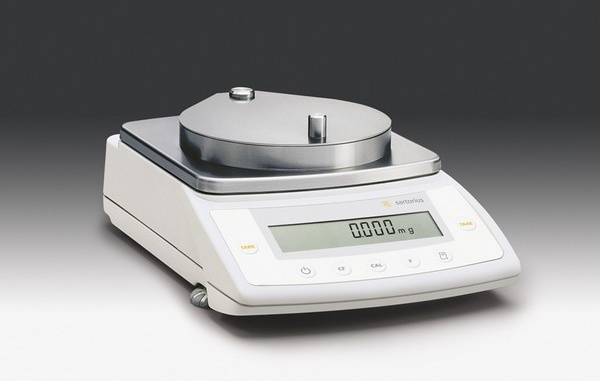
Micro scale for filter analysis (source Sartorius AG)