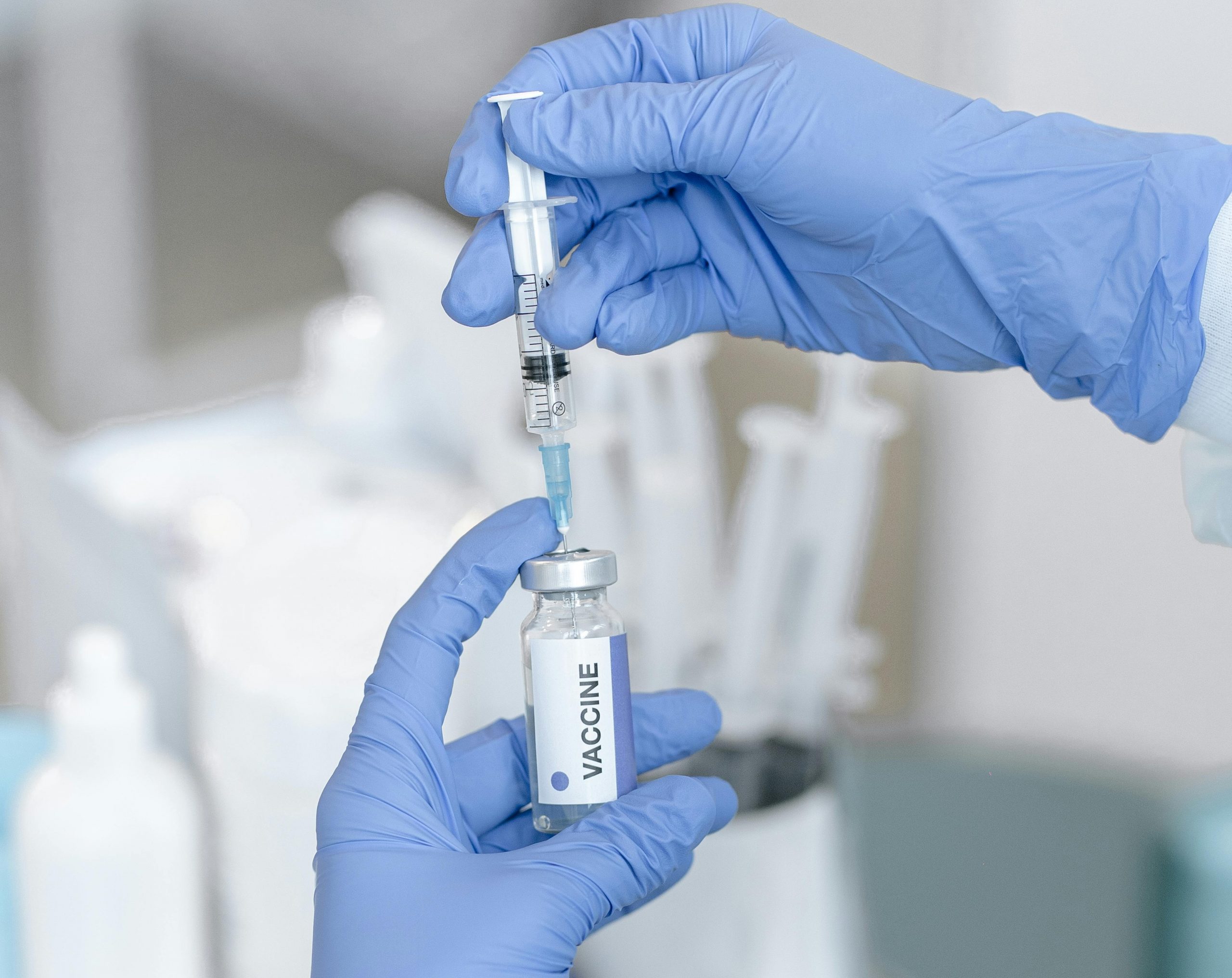
Since the publication of the VDI 2083 sheet 21, we observe an rising demand for foreign particle analysis in medical and pharmaceutical products our accredited testing laboratory In addition to the traditional analysis of inorganic particles (metals, glass, etc.), organic particles are increasingly gaining focus. Recently, we determined for a customer whether and to what extent the rubber stopper used to seal a medication bottle generates particles when pierced with a syringe to withdraw the medication. During quality control, our customer discovered unknown foreign particles in their product through visual inspection and subsequently contacted us. Using FT-IR (Fourier Transform Infrared Spectroscopy), we were able to clearly determine that the foreign particle was from the rubber stopper.

The customer was surprised that particles of several hundred micrometers could be created when piercing the stopper and wanted to statistically investigate the process. Since FT-IR, as a classic analytical method for determining organic substances, cannot be automated and is therefore only applicable to individual particles, we specifically analyzed the issue by SEM-EDX, using the Phenom ParticleX.

Over 80% of the foreign particles in a batch size of 250 medical vial were identified as rubber stoppers. Various syringe geometries and stopper materials will now be tested, and their suitability will be confirmed by statistically analyzing the foreign particles.