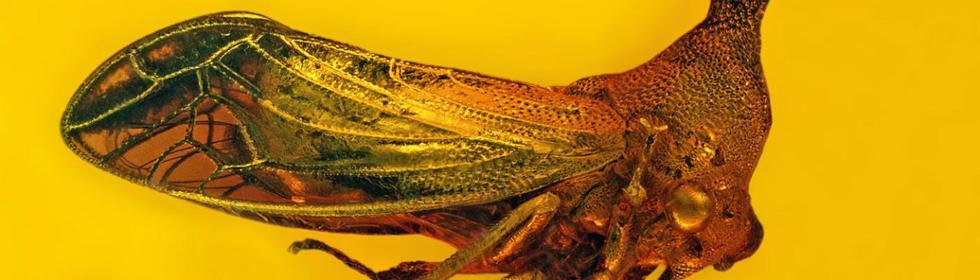
Our customer Dr. Arnold Staniczek and his team from the State Museum of Natural History in Stuttgart have recently achieved a scientific sensation.
The State Museum houses one of the largest collections of fossil plants and animals that have been trapped and preserved in Baltic amber. The determination of species has often proved difficult in the past, because the precious objects can not be removed from the fossil resin in a non-destructive manner.
To solve this problem, we equipped the team around Dr. Staniczek with a modern SkyScan micro-tomography device from Bruker. These devices are able to image the internal structure of specimens in high resolution in three dimensions.
Using this technique, the scientists created a 3D model of a resin-enclosed nest beetle and made a ground-breaking conclusion: a new species. The "Nemadus microtomographicus", as the little beetle has been known since its discovery, lived 40 million years ago in today's Baltic Sea area and can be assigned to a specific group of nest beetles. The exhibition "Living in the Amber Forest", which can be seen in the National History Museum in Stuttgart until July 2019, shows numerous of such finds preserved in amber.
Further information about the discovery at the Natural History Museum in Stuttgart can be found in an article at SWR Wissen.